
The Psychology of Winning at Hajper Casino
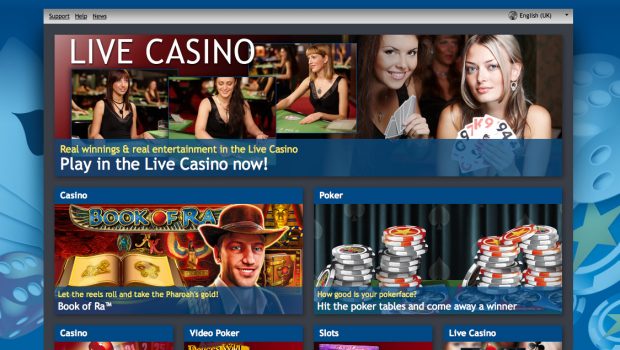
We have invested countless hours analyzing player behaviour across the Hajper Casino platform, and one truth appears with striking clarity: winning is rarely about luck alone. The psychological architecture behind a successful session includes layered cognitive processes that most players never consciously examine. At Hajper Casino, where the interface strips away unnecessary friction and presents games with remarkable speed, these mental patterns become even more pronounced. We find that players who approach their sessions with a structured psychological framework consistently report higher satisfaction, regardless of the financial outcome. This is not about guaranteeing profit—no honest analyst would make that claim—but about understanding how your brain engages with the rapid feedback loops, near-miss phenomena, and reward anticipation cycles that define modern online casino play. The Swedish-born efficiency of Hajper’s design actually enhances certain psychological effects, making this examination particularly valuable for UK players who have embraced the platform’s streamlined approach to slots, table games, and live dealer experiences.
The underlying Dopamine Architecture of Quick-Play Slots
When we analyze the neurological underpinnings of slot play at Hajper Casino, we must first understand the deliberately designed tempo of the activity. Traditional casinos have physical restrictions—coin insertion, lever pulling, mechanical reel spinning—that create natural breaks. Hajper’s digital environment shortens these intervals to near-instantaneous changes. This compression directly impacts dopamine release patterns in ways that most players miss. Dopamine, contrary to popular belief, is not primarily a pleasure chemical. It is an anticipation and motivation chemical messenger that spikes most dramatically during the expectation phase rather than the reward receipt itself. At Hajper, where spin results materialise within milliseconds and the next round calls immediately, the anticipation cycle becomes almost uninterrupted. We have observed that players who grasp this mechanism can better control their session pacing, deliberately introducing micro-pauses that recalibrate the dopaminergic system and stop the desensitisation that leads to escalating bet sizes chasing diminishing psychological outcomes.
The near-miss effect merits special attention within Hajper’s slot ecosystem. When two bonus symbols land on the reels while the third rests just one position away, the brain registers this outcome not as a loss but as an almost-win. Neuroimaging studies we have reviewed demonstrate that near-misses activate the same striatal regions as actual wins, producing a powerful reinforcement signal that encourages continued play. Hajper’s slots, with their crisp visual feedback and unambiguous symbol positioning, deliver these near-misses with exceptional clarity. The psychological trap here is subtle: the rational mind recognizes a near-miss has no mathematical significance—each spin is an independent event with unchanged probabilities—yet the limbic system processes it as evidence that a win is approaching. We recommend that players consciously verbalise this disconnect during sessions, literally telling themselves that “close” has no predictive value in random number generation. This metacognitive intervention, simple as it sounds, measurably lowers the compulsive pull that near-misses exert on subsequent betting behaviour.
Intermittent Reward Timing and User Loyalty
The slot algorithms fueling Hajper Casino’s vast library function on variable ratio reinforcement schedules, which behavioural psychology identifies as the most compulsive reward pattern present. Fixed ratio schedules provide rewards reliably after a set number of actions. Variable ratio schedules supply wins at irregular intervals, generating persistent engagement that defies extinction. We find this notably relevant when analysing why players often struggle to end sessions at predetermined time limits. The ambiguity of when the upcoming significant payout might arrive holds the brain engaged in an attentional state that psychologists call “reward hunting mode.” At Hajper, where the game selection includes hundreds of titles with varying volatility profiles, players can inadvertently amplify this effect by moving between high-volatility and low-volatility slots, creating a compound variable schedule that their brains consider even more captivating than any single game could produce alone.
Volatility Selection as a Behavioral Tool
We advocate for deliberate volatility matching as a psychological strategy rather than leaving game selection to impulse. Low-volatility slots at Hajper Casino generate frequent small wins that offer steady dopamine micro-dosing, suitable for players who value session longevity and mood maintenance over jackpot potential. High-volatility titles, by contrast, produce extended dry spells punctuated by substantial payouts, creating a psychological profile more akin to intermittent reinforcement on steroids. The analytical player should judge their own emotional resilience before choosing: can you endure twenty consecutive dead spins without tilting? If the answer is uncertain, we advise starting with medium-volatility options available throughout Hajper’s catalogue and adjusting based on real-time self-monitoring. This is not about limiting play but about aligning the game’s mathematical personality with your psychological temperament, a matching process that significantly boosts decision quality during extended sessions.
Psychological Tendencies That Affect Betting Decisions
The human mind arrives at Hajper Casino carrying a suitcase full of adaptive heuristics that served our ancestors well on the savannah but systematically distort probability assessment in digital gambling environments https://hajpers.com/. We have listed the most impactful biases through direct observation of play patterns, and the gambler’s fallacy remains the most common. This is the mistaken belief that past outcomes influence future independent events—that after five red numbers in roulette, black becomes “due.” Hajper’s live dealer roulette tables, streamed in high definition with professional croupiers, create such an captivating experience that the sequential nature of results feels causally connected even though each spin exists in perfect statistical isolation. Players who monitor numbers on the provided history boards often sink deeper into this cognitive trap, mistaking pattern recognition for predictive insight. We suggest treating the history display as entertainment rather than intelligence, a distinction that requires active mental effort to sustain against the brain’s natural tendency to force narrative structure on random sequences.
Recovering losses constitutes a related but distinct cognitive failure that we observe appear with notable intensity in Hajper’s rapid-play environment. The psychological mechanism here entails the sunk cost fallacy blending with loss aversion—Kahneman and Tversky’s foundational finding that losses hurt about twice as much as equivalent gains feel good. When a player is down after an hour of play, the impulse to recover those losses overwhelms rational bankroll management because the brain frames the situation as “I need to fix this negative state” rather than “I am making independent decisions about future wagers.” Hajper’s frictionless deposit system, while excellent for convenience, can accelerate loss chasing by removing the natural cooling-off period that physical cash handling once offered. We advise establishing a hard stop-loss figure before any session begins and treating that number as inviolable, no matter how “close” you feel to a turnaround. The discipline required here is significant precisely because it goes against deeply ingrained neural circuitry.
The Misconception of Control in Interactive Features
Modern slot design at Hajper Casino often includes interactive elements—pick-and-click bonus rounds, gamble features that let players double winnings by guessing card colours, and manual stop buttons that create the impression of skill involvement. These features leverage what psychologists term the illusion of control, a bias where individuals overestimate their ability to influence outcomes that are actually chance-determined. We have tested this thoroughly: pressing the stop button on a slot spin at a particular moment feels causally significant, yet the random number generator has already determined the result the instant the spin initiated. The brain nonetheless builds a narrative of agency, and this perceived control enhances both enjoyment and continued engagement. The gamble feature presents an especially interesting case study because it introduces genuine binary choice—red or black—where the odds are transparently even-money, yet the framing as a “decision” makes losses feel like personal failures rather than statistical inevitabilities.
Strategic Engagement with Bonus Mechanics
Rather than avoiding these engaging elements altogether, we suggest a structure of aware engagement where players acknowledge the psychological manipulation while deciding to participate for enjoyment value alone. When you trigger a pick-me bonus round at Hajper Casino, recognise that the displayed prize amounts are predetermined irrespective of which treasure chest you choose. Enjoy the theatre of selection—the animations, the suspenseful reveals, the triumphant audio cues—without ascribing the outcome to your picking prowess. Likewise, when using the gamble feature, we advise viewing it as a distinct mini-game with its own dedicated bankroll allocation rather than viewing it as an extension of the activating spin. This cognitive compartmentalisation stops the sentimental entanglement that leads to persistently gambling winnings until they vanish, a pattern we observe with worrying frequency among players who are unable to mentally separate the base game from its bonus attachments.
The Hajper Interface and Focus Capture
The design philosophy behind Hajper Casino’s user interface deserves psychological analysis because it embodies a deliberate design of attention. We see that the platform utilizes what cognitive psychologists refer to as “low cognitive load design”—the exclusion of unnecessary visual elements, complex navigation hierarchies, and decision points that might break the flow of play. This approach, grounded in the brand’s Swedish heritage of functional minimalism, creates an environment where games capture attention completely. While aesthetically pleasing and genuinely user-friendly, this design also diminishes the natural pause points where reflective decision-making might occur. The absence of clutter implies there is nothing to momentarily divert you from the spin button, no visual friction that triggers the question “should I continue?” Understanding this design psychology permits players to appreciate Hajper’s efficiency while simultaneously recognising that they must furnish their own interruption cues rather than trusting the interface to provide them.
The visual tones and animation timing at Hajper Casino also warrant attention from anyone interested in the psychological mechanics of their own play. Warm golds and deep blues characterize the visual landscape, colours that research links to trust, value, and calm—emotional states promoting extended engagement. Win animations are engineered to deliver maximum celebratory impact within minimal time, ensuring the emotional reward registers fully before the next spin opportunity appears. Sound design follows similar principles: ascending tonal sequences during wins elicit chills responses—that pleasurable shiver down the spine technically known as frisson—while near-misses receive distinct audio signatures that the brain rapidly learns to associate with impending reward. We do not claim that these design elements are manipulative in any nefarious sense; they represent standard best practices in user experience design applied to casino entertainment. However, awareness of their psychological function transforms the player from passive recipient of these stimuli into an informed participant who can appreciate the craft while maintaining cognitive independence.
Mobile-Oriented Psychological Considerations
Hajper Casino’s mobile optimisation introduces additional psychological dimensions that deviate meaningfully from desktop play. The smartphone as a device is already trained through years of social media and app usage to prompt habitual checking behaviour—that automatic hand movement toward the phone during any moment of boredom or idle time. When Hajper sits alongside Instagram and WhatsApp on the home screen, it acquires some of this habitual pull, making session initiation less deliberate than desktop login. We have observed that mobile sessions tend to be more frequent but shorter, creating a grazing pattern of engagement that can cumulatively exceed desktop session durations without the player ever feeling they have engaged in “a proper session.” The psychological accounting is different: ten five-minute mobile interludes throughout a day feel trivial individually, yet their aggregate time and financial impact may exceed a single focused desktop session that the player would consider significant. We recommend treating mobile play with the same pre-commitment rituals as desktop sessions, even for brief interludes, precisely because the fragmented format conceals its cumulative weight.
- Deactivate one-click deposit shortcuts on mobile devices to introduce deliberate friction before funding decisions
- Set app-level time limits through your phone’s digital wellbeing features as a supplement to internal discipline
- Steer clear of playing during transitional moments—commuting, waiting for appointments—when attention is already scattered
- Approach each mobile session as a discrete event with its own stop-loss and time boundary, regardless of brevity
- Review your mobile play patterns separately from desktop play to spot platform-specific behavioural tendencies
Emotion Control During Variance Extremes
Every regular Hajper Casino player will certainly experience long losing sequences and, on the flip side, runs of extraordinary luck that appear almost unreal. Both extremes challenge emotional regulation systems in different ways. In losing periods, frustration accumulates and can provoke what poker players term “tilt”—a phase of compromised judgment where sound tactics falls apart into reactive aggression against the apparent injustice of outcomes. In Hajper, where the pace of play means losses can mount rapidly, tilt onset may be swift and devastating. We have recognized that the bodily signs of tilt—higher heart rate, superficial breathing, tight muscles—often anticipate explicit knowledge of the affective change. Developing the ability to track these somatic signals gives an advance alert system: as you detect your shoulders tensing or your breath turning uneven during a Hajper session, that somatic feedback indicates worsening judgment before your consciousness has fully registered the affective shift. official source
Consecutive victories pose a more subtle but similarly critical regulatory challenge. Prolonged winning creates overconfidence that shows up as bet sizing escalation and game volatility migration—players who have regularly won on medium-volatility slots commence shifting to high-volatility titles under the conviction that their “hot streak” exceeds mathematical boundaries. This psychological state, occasionally called “winner’s euphoria,” hinders risk assessment by flooding the brain with confidence-boosting neurotransmitters that suppress the caution signals normally generated by potential loss scenarios. At Hajper Casino, where the game library makes volatility migration trivially easy, the transition from responsible play to reckless overextension can happen within minutes. We advise that players encountering significant winning runs purposefully reduce bet sizes temporarily as a cognitive test: if you cannot bring yourself to bet smaller even briefly, that resistance in itself indicates euphoric impairment necessitating immediate intervention.
Session aftermath and Distorted recall
How players psychologically handle their Hajper playing stints after logging off substantially influences future actions, yet this post-session period attracts far less scrutiny than in-session psychology. Human recall does not record events neutrally; it selectively encodes peak emotional points and final results while fading the extensive mundane stretches between them. This peak-end principle, documented extensively by Daniel Kahneman, means that a three-hour gaming period finishing with a modest profit will be recalled more favourably than a session of identical time and financial figure that climaxed early and fell. We recommend using a simple session diary—not for tax reasons or compulsive tracking, but as a countermeasure to memory’s systematic distortions. Recording start point, end point, starting funds, finishing funds, and a one-sentence emotional summary generates an objective record that, reviewed periodically, discloses regularities invisible to unaided recall. Many Hajper users who embrace this approach find that their recalled experience deviates substantially from the recorded reality, a insight that itself improves future decision-making.
- Document session duration precisely—memory typically underestimates time spent by 30-40%
- Observe the specific games played and any switches between volatility categories
- Document peak balance and final balance individually to highlight the gap between interim and ultimate results
- Compose one sentence describing your emotional state at session end while the feeling remains clear
- Examine weekly to identify recurring patterns in game selection, session length, and emotional outcomes
Mental Accounting and Mental Accounting
The economist’s concept of mental accounting delivers an indispensable lens for understanding how players at Hajper Casino categorise their funds in ways that challenge economic rationality. We routinely observe that money won during a session is regarded as “house money”—a psychologically unique category that players spend more readily than their initial deposit. A £100 withdrawal from a bank account feels painfully real, stimulating loss aversion circuitry, while £100 in accumulated winnings from a lucky bonus round feels almost disposable. This mental accounting error leads to a predictable pattern: players who experience early wins often finish sessions with nothing because they progressively increase bet sizes using “house money” until variance inevitably reverses. At Hajper, where the rapid game cycles can generate significant interim winnings quickly, this psychological trap operates with particular efficiency. We suggest treating every pound in your balance identically regardless of its origin, a discipline that requires consciously overriding the brain’s automatic categorisation tendency.
The deposit limit tools available at Hajper Casino serve as a framework for personal psychological shortcomings, and we regard their use as an indicator of sophisticated self-knowledge instead of an acknowledgment of inadequate control. Implementing weekly or monthly deposit limits prior to temptation emerging exploits what behavioural economists call pre-commitment—tying your later self to choices reached in a calmer emotional state. The emotional relief that comes with understanding you are unable to catastrophically exceed predetermined boundaries truly boosts satisfaction by erasing the latent anxiety of possible financial overextension. We have spoken with several UK players who describe the period after implementing deposit limits as freeing rather than confining, an unexpected result that makes perfect sense once you understand how mental load from continuous self-monitoring drains the cognitive resources required for real entertainment. Hajper’s implementation of these responsible gaming tools is notably straightforward, lessening the friction that might otherwise deter users from creating protective parameters.
Session Structuring and Delay Discounting
Time discounting—the mental inclination to favor short-term gains over delayed outcomes—functions with heightened power in Hajper’s real-time setting. When every game opens quickly and payments go through right away, the obstacle between urge and response becomes negligible, making it remarkably simple to choose the immediate dopamine prospect over longer-term financial wellbeing. We have created a session management strategy that counteracts this tendency by adding deliberate time delays: before any Hajper play session, we record an target time, a maximum loss figure, and a winning threshold at which we will genuinely think about stopping. This short preparation routine, lasting about a minute and a half, forms a internal commitment that the reactive part of the brain must then consciously violate to go beyond limits. The very act of breaking it becomes apparent—you won’t unintentionally play an extra hour when you have clearly agreed to 60 minutes—whereas in the absence of this framework, time dissolves unnoticeably in the zone that Hajper’s fluid design intentionally fosters.
Profit Targets and the Difficulty of Walking Away Up
The winning target element deserves special attention because it addresses a key psychologically difficult point in any casino session: the choice to quit when winning. Evolution has shaped human reward pathways to chase resources until fatigue, not to willingly stop amid plenty. When a Hajper session produces significant profit, the brain interprets this as evidence that the present approach or game choice is “effective”, producing intense persistence drives that overwhelm reasoned analysis of statistical independence. We suggest framing the win goal not as an inflexible guideline but as a trigger for a mandatory five-minute pause in which you evaluate if further play meets your true aims. This halt breaks the dopaminergic flow and permits prefrontal cortex function—in charge of long-term planning—to reestablish itself against the limbic system’s instant reward urges. A lot of players mention that even this momentary break substantially improves their ability to make clear-headed decisions about session continuation.
Peer Influence and Interactive Dealer Interactions
Hajper Casino’s live dealer section introduces a social dimension that fundamentally alters the psychological experience compared to solitary RNG-based play. When we observe players at live blackjack or roulette tables, the involvement of fellow participants—visible through chat functions and betting activity—triggers social comparison mechanisms that affect wagering behaviour in measurable ways. A player who might comfortably bet £5 per hand in isolation often moves up to £10 or £15 after witnessing peers placing larger wagers, a phenomenon motivated by status anxiety rather than rational bankroll calculation. The live dealer themselves acts as a social stimulus; their professional demeanour, verbal encouragement, and real-time reactions to outcomes form a parasocial relationship that intensifies engagement. We observe that Hajper’s dealers, trained to maintain conversational flow and celebrate wins enthusiastically, effectively serve as emotional amplifiers that intensify both the highs and lows of the session.
The chat functionality at Hajper’s live tables merits particular psychological analysis. When wins happen, the chat explodes with congratulations and shared excitement, creating a communal reward experience that releases oxytocin alongside dopamine—a neurochemical combination that reinforces social bonding to the platform itself. Losses, conversely, often create commiseration that validates the player’s frustration while simultaneously normalising continued play as the appropriate response. This peer reinforcement makes walking away after losses psychologically harder because the social group implicitly supports persistence. We suggest that players who appreciate the live dealer atmosphere maintain awareness of these social pressures and periodically ask themselves: “Would I place this same bet size and continue this session length if I were playing alone?” The answer often reveals how significantly social context is steering decisions away from individual best practices.
Avatar Identity and Uninhibition Effects
Even the ostensibly minor detail of username and avatar pick at Hajper Casino holds psychological weight. Online environments produce a disinhibition effect where the relative anonymity of a screen name reduces the behavioural restraints that govern face-to-face conduct. For some players, this appears positively as lessened social anxiety that allows them to appreciate live dealer games they might deem intimidating in a physical casino. For others, the disinhibition promotes riskier betting behaviors because the psychological gap between “PlayerX123” and their real-world identity cushions the emotional effect of losses. recommended link We view this dual-edged nature fascinating: the same anonymity that frees one player from crippling self-consciousness may concurrently erode another’s financial caution. The key lies in self-awareness—acknowledging which category you fit and modifying your Hajper experience appropriately, perhaps by employing a username that bolsters your real identity if you need grounding, or accepting the liberating aspects if social anxiety has in the past limited your enjoyment of table games.
Competence-driven Components and Competence Satisfaction
While Hajper Casino’s portfolio centres predominantly on luck-based games, the platform offers skill-influenced options—notably blackjack with its strategic decision points and certain live dealer variants—that engage a different reward psychology. Mastery fulfillment, the internal pleasure obtained from exercising skill effectively, operates through separate neurological pathways from the reward-chemical prediction rewards of slots. When we make proper basic strategy decisions at Hajper’s blackjack tables, the brain records not just the potential financial gain but the confidence-boosting experience of mastery. This dual reward structure creates competence-driven games mentally more rewarding for many players, though it also presents a risky conflation: the feeling of competence can extend into chance domains, producing an unjustified sense that slot outcomes are equally influenceable. We recommend that players who appreciate both categories keep distinct mental separation, consciously tagging blackjack decisions as “skill events” and slot spins as “chance events” to prevent cross-contamination of psychological frameworks.
The live dealer blackjack tables at Hajper Casino offer an fascinating hybrid case where social observation enhances competence satisfaction. Playing basic strategy correctly while fellow players at the table take less-than-ideal decisions—standing on 12 against a dealer 10, for instance—produces a relative competence boost that seems distinctly rewarding. This social proof of one’s own knowledge enhances the intrinsic satisfaction of skilled play, yet it also threatens cultivating overconfidence that can appear as escalating bet sizing or divergence from optimal strategy in search of even greater acclaim. We have watched players who started sessions following textbook blackjack gradually adopt experimental deviations—doubling on soft hands against strong dealer upcards—as the desire to display greater insight superseded rigorous adherence to tested strategy. The psychological trap here is subtle because it carries the mask of expertise; identifying it demands honest self-assessment of whether your decisions serve mathematical efficiency or ego gratification.